Ropen Winery
Banny’s Banana Wine
Culturally inspired, deeply rooted. A dry wine fermented from ripe Kenyan bananas , fruit that would otherwise have gone to waste.
Culturally inspired
A plant woven through every ceremony
The banana plant has been a culturally significant crop for many East African communities. It featured in birth, marriage and death ceremonies. It is a seasonless crop that saw people through times of hunger, and its smooth puree is still used to introduce infants to solid food.
It provided building materials, especially for thatching houses, and served as utensil and serving dish in ceremonial offerings and festivals. Its fruit has been used for centuries to make healthy traditional brews, both raw and ripened.
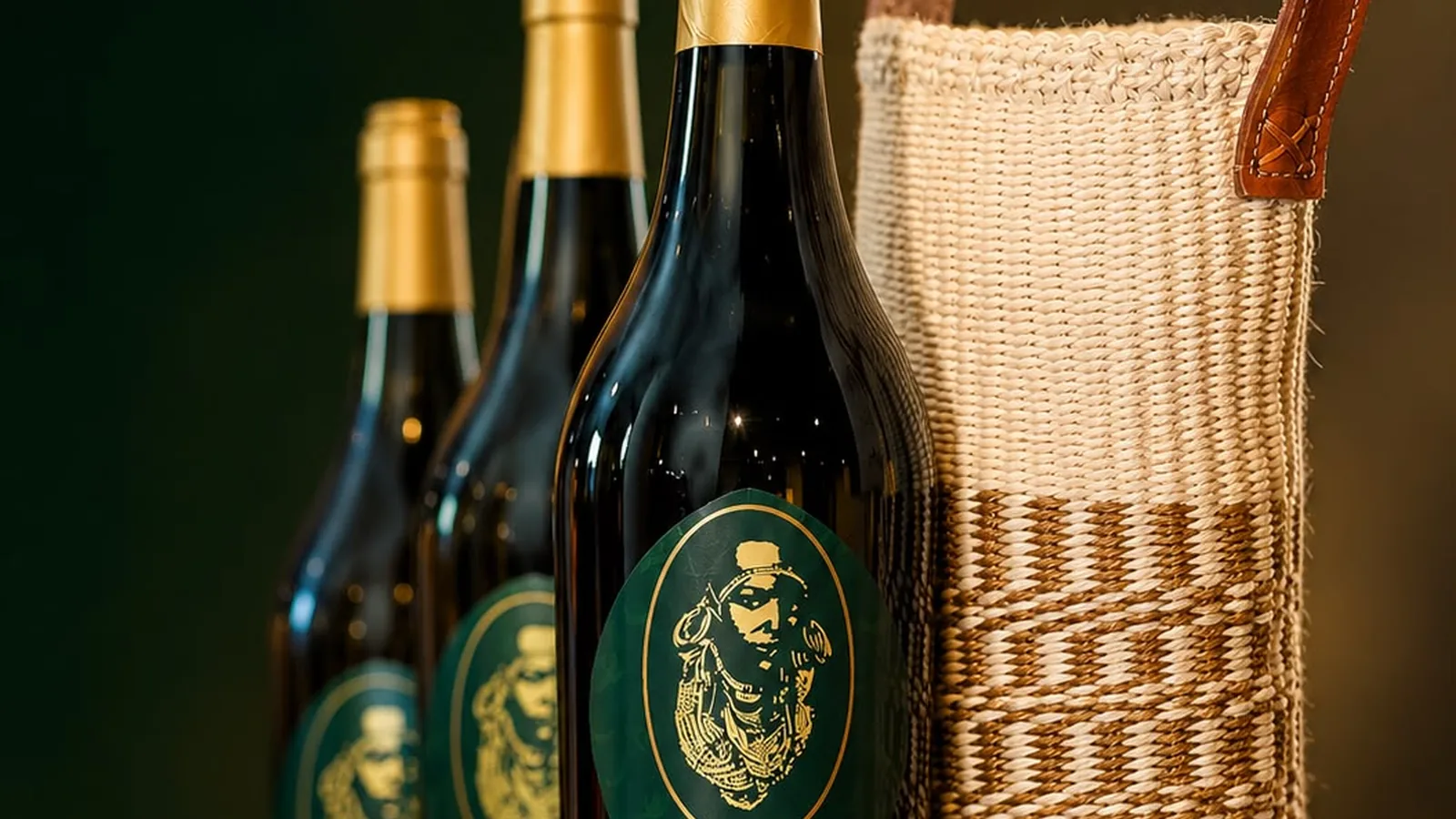
Many of those uses were led by the traditional woman , in food and brew preparation, in thatching, in weaving. That is who you see on every bottle.
Empowerment rooted
The glut that started the winery
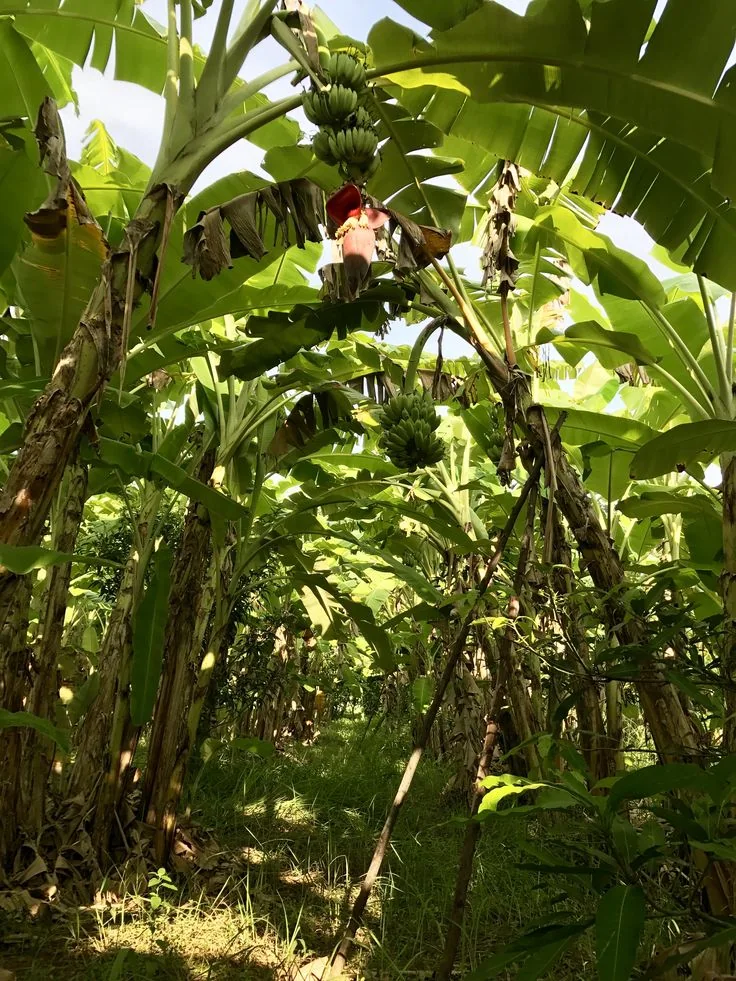
Banana suckers were distributed across many parts of Kiambu during our founder's service as Women's Representative. The trees matured, fruit production began , and the resulting glut brought low prices and waste. It became apparent that fruit alone could not deliver the economic empowerment that had been envisaged.
Visiting homes and witnessing hunger, and lack of basics like sugar, yet bunches of bananas hung about in the compound , that made me embark on a journey of more meaningful value addition.
That journey set out to address two things at once: the banana-fruit glut and its post-harvest losses, and the use of the entire banana plant , not just the fruit.
Eco-friendly drinks
Made from what would have been wasted
Every decision in the process , the fruit, the power, the packaging , is made to take less out than it puts back.
Overripe fruit, rescued
Made out of overripe bananas that would otherwise go to waste, from a crop available throughout the year and characterised by high post-harvest losses.
Solar powered
The manufacturing process requires fairly low power consumption, and the power it does require is drawn from solar.
Packaging that returns
Recyclable and reusable glass bottles, bulk packed in carton boxes, presented in biodegradable paper packs, corks and labels, with banana-fibre carriers.
In the bottle
Dry, and honest about it
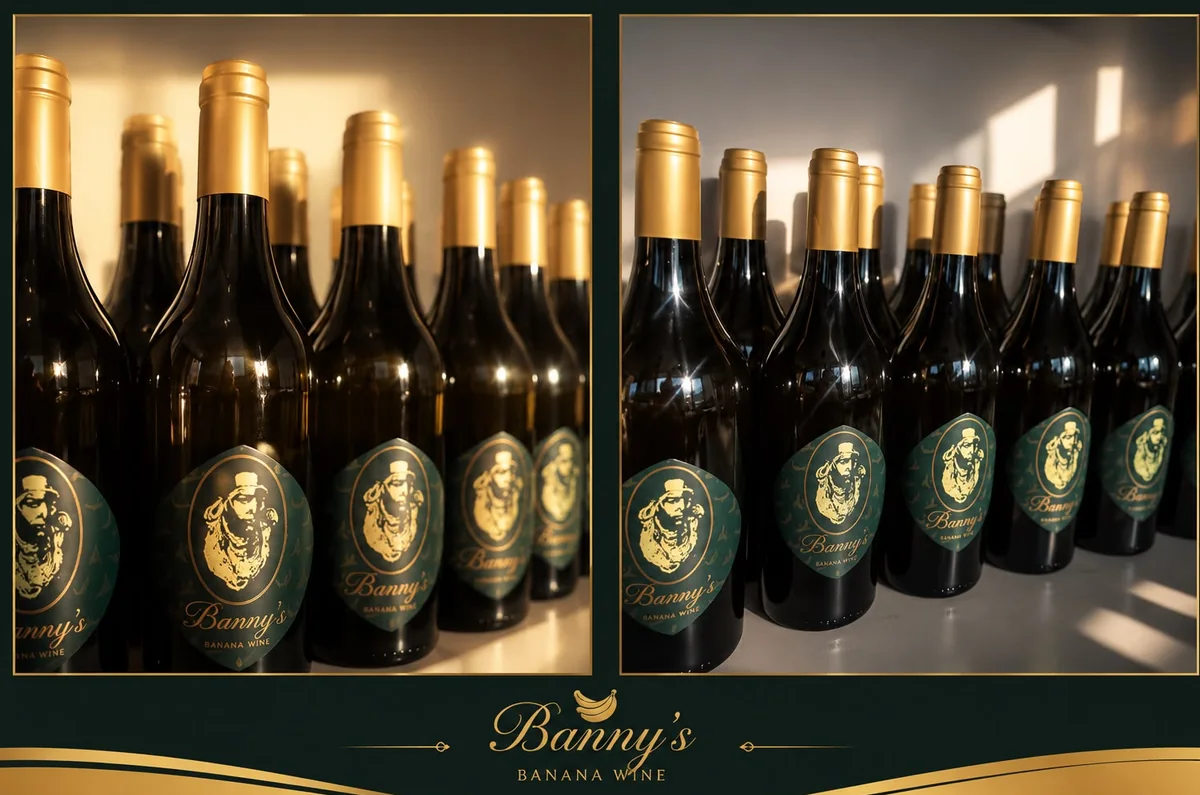
Banny’s is a dry banana wine , fermented out rather than left sweet, so the fruit reads as fruit and not as syrup. Serve it well chilled at 8–10 °C. Once opened, keep it refrigerated.
- StyleDry banana wine
- Strength8.5% ABV
- Bottle750 ml glass, recyclable
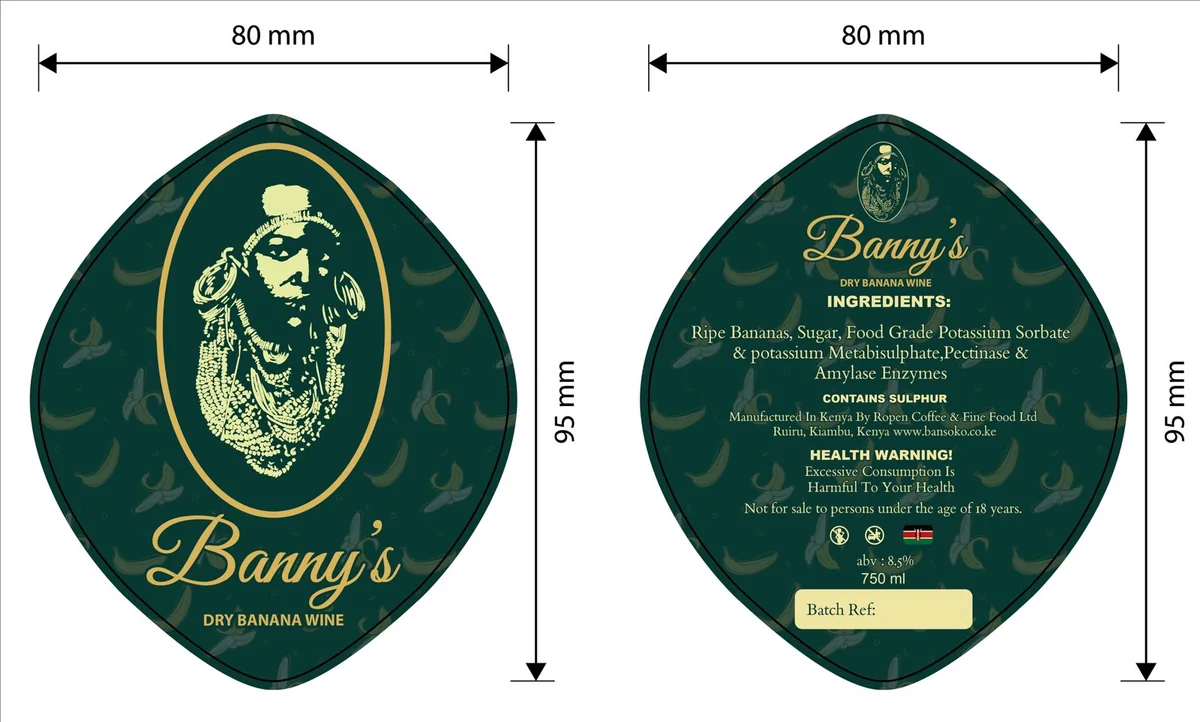
- IngredientsRipe bananas, sugar, pectinase & amylase enzymes, food-grade potassium sorbate & potassium metabisulphate
- AllergensContains sulphur
- Made inRuiru, Kiambu, Kenya
Questions
Banny’s, answered
What is Banny's Dry Banana Wine?
A dry wine fermented from ripe Kenyan bananas at our Ruiru winery. It is bottled at 8.5% ABV in 750ml glass, and made from ripe bananas, sugar, pectinase and amylase enzymes, with food-grade potassium sorbate and potassium metabisulphate as preservatives. It contains sulphur.
Why bananas rather than grapes?
Because the fruit was already here and going to waste. Bananas crop year-round in Kiambu and carry high post-harvest losses , a glut drives prices to nothing and the fruit rots in the compound. Wine turns that surplus into something with a shelf life and a market.
What does it taste like, and how should I serve it?
Dry rather than sweet, with the fruit still clearly present. Serve it well chilled at 8–10 °C. Once opened, keep it refrigerated and finish it within a few days.
What makes it an eco-friendly drink?
It is made from overripe bananas that would otherwise be wasted, brewed with low power drawn from our own solar, and packed in recyclable glass, biodegradable paper packs, corks and labels, and banana-fibre carriers made at Bansoko Centre.
Who is the woman on the label?
She represents the traditional Kikuyu woman. The banana plant's key uses , food and brew preparation, thatching, weaving , were led by women, and the label honours that. Part of what we do supports welfare programmes for aged women in our local communities.
Do you supply bars, restaurants and events?
Yes. We sell singles and cases through this shop, and we supply trade customers on standing terms. Use the contact form and our sales team will come back to you with wholesale pricing.
Bring home a bottle
Banny's is on sale online in singles and cases. Order in minutes and pay with M-Pesa.