Njagũ Farm · Kiambu
Specialty Kenyan coffee
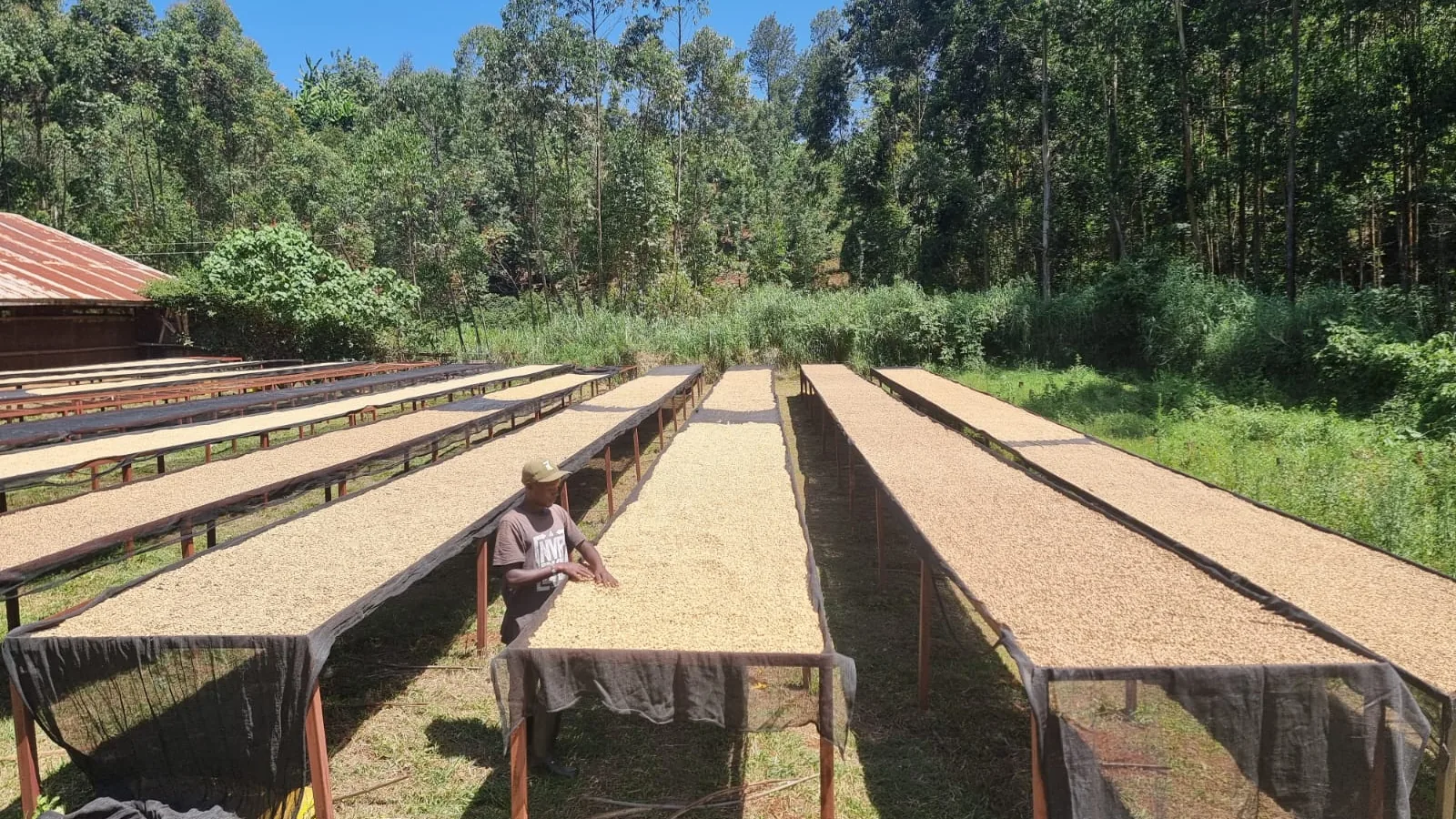
Single-origin, traceable to the tree. SL28, SL34 and Ruiru 11 grown between 1,550 and 1,725 metres, fully washed and sun-dried on our own beds.
The farm
Njagũ, on a hillside above a permanent stream
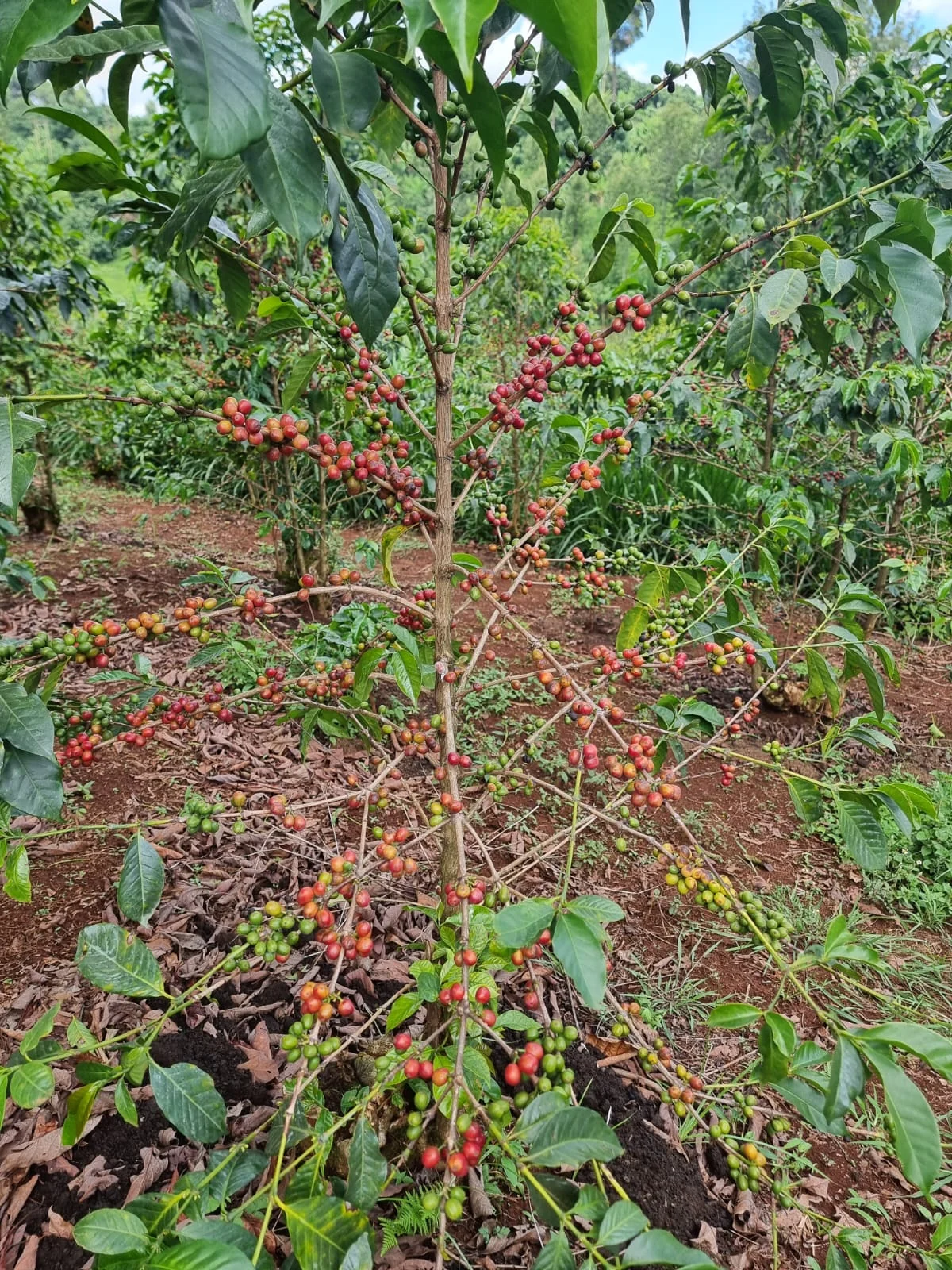
Our specialty coffee farm sits in Njagũ village, near the boundary of the Lari and Githunguri sub-counties of Kiambu. It lies on a hilly slope ranging from 1,550 to 1,725 metres above sea level, and borders a permanent stream at its lower end.
The area receives an annual average rainfall of 1,380mm, and temperatures range between 15 °C and 23 °C. Its soils are reddish to brown, deep, well-drained fertile humic nitisols derived from volcanic rock , the combination that gives Kenyan arabica its reputation.
History
Trees that have been yielding for seventy years
-
1912
Coffee growing is introduced to the wider Kiambu area by Christian missionaries, and subsequently adopted by white-settler farmers between 1912 and 1950 , using both forced and wage labour, mainly by women and children.
-
1954
For decades, colonial rule prohibited native Africans from growing cash crops like tea and coffee. That prohibition holds until 1954.
-
1990s
A more disease-resistant variety, Ruiru 11 from the Kenya Agricultural Research Laboratories, begins taking root from the early 1990s.
-
2000s
The Kenyan coffee sector goes through turmoil and low farmer prices in the late 1990s and early 2000s. A number of farms are neglected, or their crop uprooted altogether.
-
2023
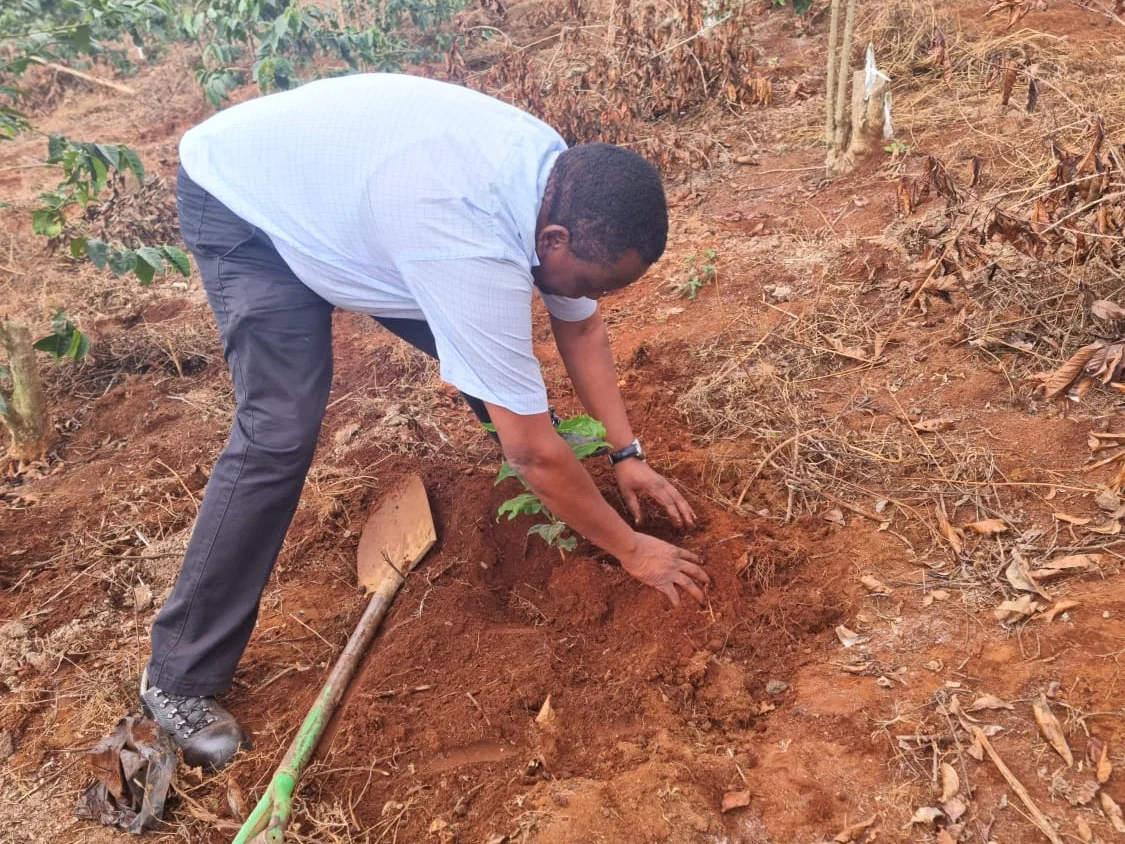
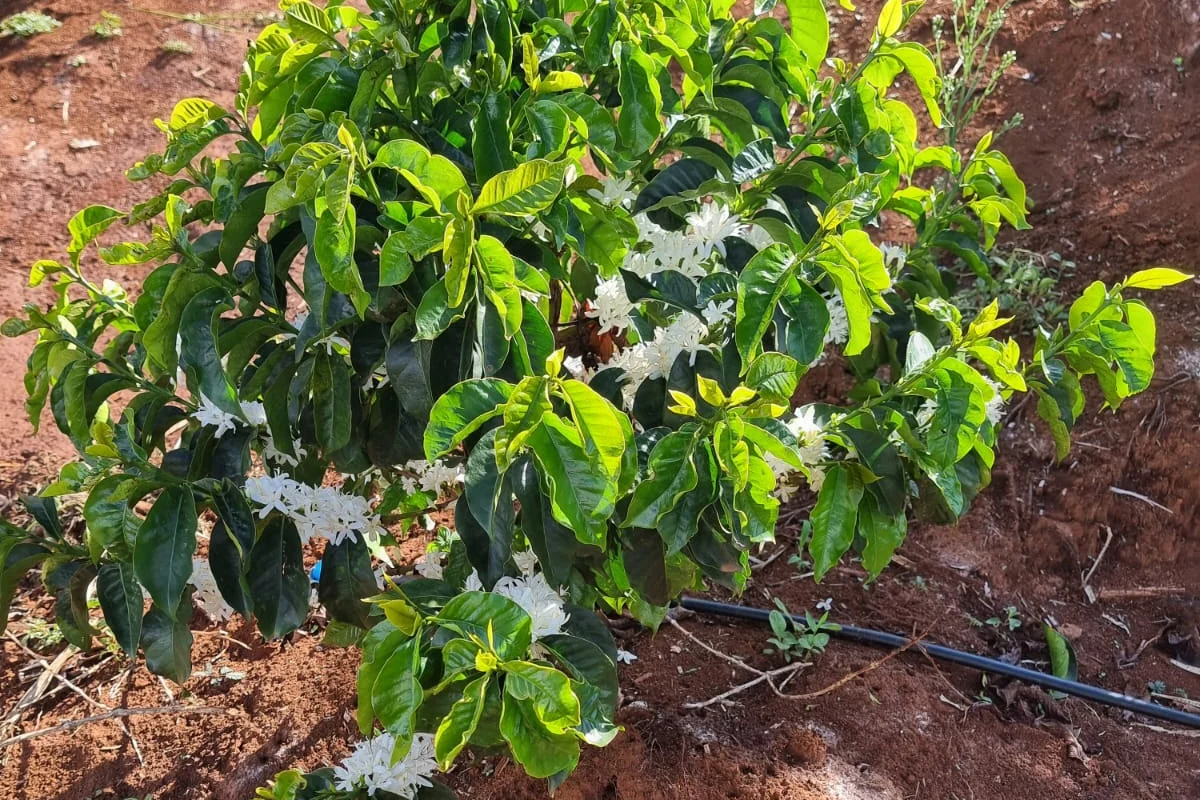
We acquired one such farm and have been on a rehabilitation journey since: drilling a borehole, trenching and benching, adding a new drip irrigation system, and replacing gaps with improved varieties.

In honour of the women who planted it
In honour of the women and children then enlisted into forced labour establishing these coffee farms, part of our coffee proceeds goes to support aged women welfare programmes in the local communities.
Processing
Washed, then fourteen days in the sun
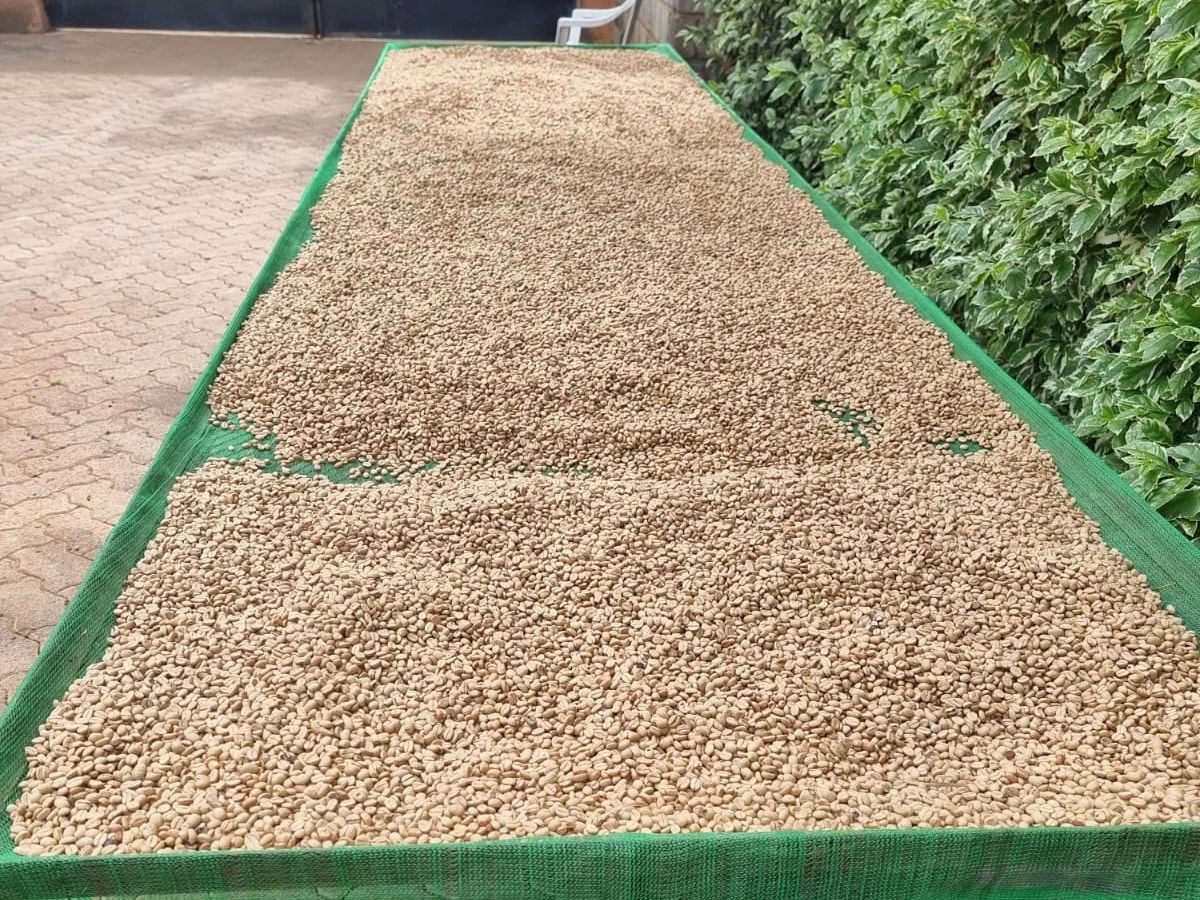
Our coffee is wet-processed , washed. The skin and pulp are removed from the cherry before the bean is set out to sun-dry for up to 14 days, until the moisture content goes below 11%.
Sometimes we send our coffee to the local cooperative society factory, where it undergoes the same washing, pulping and sun-drying.
How we farm
Good agricultural practices, in practice
We believe in and practise the following on every block of the farm.
Soil first
Soil conservation and minimal tillage, with trenching and benching across the slope to hold water and stop erosion.
Minimal spray
Minimal spraying, using approved organics, and application of organic manure rather than routine chemical inputs.
Resistant replanting
Crop gaps replaced with disease-resistant varieties, alongside shade regulation and selective harvesting of ripe cherry only.
Export
TerraNova Coffee LLC, United States
TerraNova Coffee LLC is a USA-registered company affiliated to Ropen Coffee & Fine Foods Limited, through which we supply Kenyan specialty coffee into the American market.
- Contracting estate farms and guiding them on the good agricultural practices the specialty market requires
- Ensuring a steady supply of single-origin, traceable specialty coffee
- Providing a guaranteed market for contracted farmers
- Practising fair trade, and continuing the welfare of the aged women who planted coffee in the Kenyan highlands from the 1950s
Green coffee, stateside
Stock is held at Continental Terminals in Carteret, New Jersey, in AA Reserve, AA Specialty and AB Specialty grades scoring 85–89 on the SCA scale.
Availability changes with each crop , see the TerraNova page for current grades, volumes and the sample desk.
Questions
Our coffee, answered
Where is Njagũ Farm?
In Njagũ village, near the boundary of the Lari and Githunguri sub-counties of Kiambu. The farm sits on a hilly slope between 1,550 and 1,725 metres above sea level and borders a permanent stream at its lower end.
What are the growing conditions?
The area receives around 1,380mm of rainfall a year, with temperatures between 15 °C and 23 °C. The soils are reddish to brown, deep, well-drained fertile humic nitisols derived from volcanic rock.
Which varieties do you grow?
Mostly SL28 and SL34 , many of the trees planted in the colonial era are still yielding today. Ruiru 11, a more disease-resistant variety from the Kenya Agricultural Research Laboratories, has been taking root since the early 1990s, and we use it when replacing gaps.
How is the coffee processed?
Wet-processed, or washed: the skin and pulp are removed from the cherry before the bean is set out to sun-dry for up to 14 days, until the moisture content falls below 11%. Some of our coffee goes to the local cooperative society factory, where it undergoes the same washing, pulping and sun-drying.
What do you mean by good agricultural practices?
Soil conservation, minimal tillage, minimal spraying with approved organics, application of organic manure, replacing crop gaps with disease-resistant varieties, shade regulation and selective harvesting.
Why do proceeds go to aged women's welfare?
Because the coffee farms of this area were established largely on the forced and low-wage labour of women and children between 1912 and 1954. Part of our coffee proceeds goes to support aged women welfare programmes in the local communities, in honour of those who did that work.
Can I buy your coffee outside Kenya?
Yes. Our USA-registered affiliate, TerraNova Coffee LLC, holds stateside stock of single-origin Kenyan specialty green coffee. See the TerraNova page for current grades and their sample and order desk.
Coffee traceable to the tree that grew it
Single-origin Njagũ Farm coffee, roasted and delivered across Kenya. Pay with M-Pesa.